Tuesday, December 28, 2010

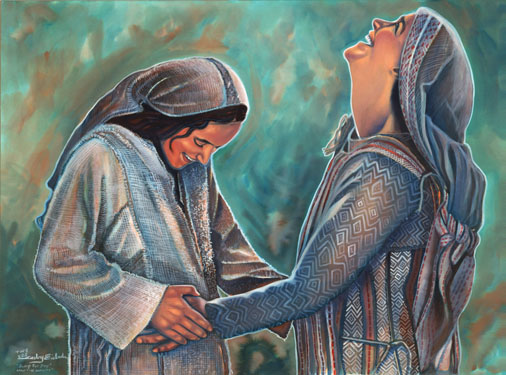
Birthing a Royal - Luke 2:1-20

January 2, 2010
Josh Broward


Read Luke 2:1-20.

    The Roman Emperor called for a census, so Mary and Joseph took a trip.  Trips are not always easy.  When my family travels back to the USA, it usually takes us more than 24 hours to get from our front door to our family’s front door.  It is stressful, tiring, and not very much fun. 
    Mary and Joseph had to take a much longer trip - at least in terms of time, and Mary was very, very pregnant.  Doctors suggest that pregnant women should not travel in the last month or two of their pregnancy.  There are two reasons why pregnant women should not travel.  First, it’s not safe for the mother and baby.  Second, it’s not safe for the dad!  Have you ever been around a pregnant woman?

    When my mom was 9 months pregnant with my sister, Dad was driving them to church.  A few minutes away from the church, Mom started crying wildly.  My dad looked over at her, confused: “What’s wrong?”  
    “My dress doesn’t fit.  It hangs crooked.”  Her belly was so big that the dress didn’t go down as far in the front as it did in the back.
    Dad said, “You’re 9 months pregnant.  Your dress is supposed to hang crooked.”
    “Take me home!”
    “But we’ll miss church.”
    “Take me home!!”
    “Can’t you just sit in the back?”
    “TAKE ME HOME NOW!!!”
    “OK.”

    I’m telling you it’s not safe to be around a pregnant lady.  They get irrational and violent.  So here are Joseph and Mary going to Bethlehem, and don’t be fooled by Luke’s simple words, “He went there … with Mary” (2:5).  Nazareth was 90 miles (145 kilometers) from Bethlehem.  90 miles from Nazareth, and they didn’t have the KTX.  They didn’t even have the slow train.  They had the slow donkey.  Realistically, that trip probably took them more than a week.  90 miles with Joseph walking and Mary riding that donkey, and her bladder felt every bump.  They stopped about every 10 feet because Mary had to go pee. 
    I imagine that Mary asked about 1,000 times, “Why does Caesar Augustus want to count us now?  Can’t he wait a few months?  Can’t we wait until my feet aren’t the size of small boats?”

    Korea recently held a census.  Someone came to our apartment with a little clipboard and asked me a few questions.  She filled out about 10% of the form.  Then she ran out of English, and I ran out out of Korean, so she left.  All in all, it was pretty painless.
    Doing the census in Bethlehem would have been a completely different story.  Everyone had to go to their family’s hometown to register.  Bethlehem was just a small country village that nobody cared about except for one thing.  King David was born there.  As a king, David had five wives and lots of kids, and his son Solomon had 700 wives and 300 concubines.  How many kids do you think he had?  And that was around 1,000 years before Jesus.  Tens of thousands of people were packed into the tiny town of Bethlehem for the Roman census.  It took days, maybe weeks or months, to get an appointment to register for the census. 
    So after all the bathroom breaks, Mary and Joseph get to Bethlehem, only to find the town is already full of people.  Joseph checks every inn, hotel, motel, and spare room in town.  Nothing.  They’re all full.  I can just hear that pregnant woman now: “I told you to make a reservation!  Didn’t I tell you to make a reservation?!”  She is starting to lose it, slipping into crazy pregnant land.  She grabs some guy walking by, “I told him to make a reservation.  Did he make a reservation?  No!  I told you to make a reservation!”  Finally, Joseph and Mary find a barn or a cave where they could at least have a warm place to sleep out of the rain. 
The next verse gives us irrefutable evidence that Luke is a man.  Luke writes 5 verses about the census.  He tells us the name of the Roman Emperor and the governor of Syria.  He tells us whether this was the first or second census for Quirinius.  He tells us where Mary and Joseph started.  He tells us what’s special about Bethlehem and Joseph’s connection with Bethlehem.  I’m surprised he didn’t draw a little map write there in the text.
But Luke only says one little sentence about the birth of the baby: “While they were there, the time came for the baby to be born, and she gave birth to her firstborn, a son” (2:6-7).  That’s it.  The time came, and the baby was born.  No details.  No horror stories.  Nothing.
If a woman were telling this story, we would know what Mary ate the night before and how it gave her heart burn that morning, and that’s how she knew the baby was coming.  We would know where she was when her water broke and how it ruined her best dress.  We would know that she went through 17 hours of labor that felt like 17 years.  We would know that Mary felt like her abdomen was the epicenter of the worst earthquake in human history.  We would know Jesus’ size and weight.  We would know all the stupid things Joseph said to try to make her feel better, and we would know how Mary’s heart melted when she held Jesus in her arms for the first time.
But instead, all we got was: “She gave birth to a boy.”  Without a doubt, based simply on this passage alone, we know that Luke was absolutely a man.

When my mom used to complain about how difficult delivery was, my dad - I kid you not! - my dad would always say, “Now over in China, those women just work in the rice patties right up until it’s time for the baby.  Then, they squat down by the road, pop the baby out, swing it up on their backs and start working again.”  That always drove my mom crazy.  I think he said that just to drive her crazy.
When Sarah was 9 months pregnant with Emma, we were ready for Emma to come at any time.  One day, when I was getting ready to leave for class at seminary, Sarah said she thought she had a contraction.  I skipped class, and we went to the mall and walked about 10 miles trying to get that baby to come out.  No baby.  A few days later, Sarah woke me up in the middle of the night, and said she thought her water broke.  We went to the hospital and stayed there for several hours.  No baby. 
A few days later, they induced labor for Sarah.  They gave her medicine to make her body start having contractions to push the baby out.  We went to sleep, and Sarah woke up about 3am with contractions.  We spent the next 16 hours going through labor. 
They had all of these cool machines hooked up to Sarah.  You could see her heart rate and her blood pressure.  There was even a machine that showed a graph of her contractions.  The little line would go up and down as her body contracted.  Sometimes, I was so curious that I watched the machine instead of Sarah.  That little line would go way up, and I’d say, “Oooh, honey that was a big one.”  “I KNOW!!!”
She liked to hold my hand when the contractions were coming, and she would squeeze really hard.  Sometimes she would ask, “Am I squeezing to hard?” “No --- it’s OK. ---“
I used to watch the TV show Rosanne, and I’ll never forget the show when she had her last baby.  Her husband is there by her side trying to support her.  She is screaming and huffing in pain.  She grabs him by the hair and says, “You did this to me!!!”
    In the book Anna Karenina, Leo Tolstoy describes one young father watching his wife, named Kitty, give birth to their first child.  Tolstoy says he “heard someone shrieking and moaning in a way he had never heard till then, and he knew these sounds were produced by what once was Kitty. …  Kitty’s face did not exist.  In its place was something terrible, both because of its strained expression and because of the sounds which proceeded from it.”  He felt “that his heart was breaking.  The terrible screaming did not cease, but grew yet more awful until, as it reached the utmost limit of horror, until it suddenly ceased.”
    Emma was born by C-section, so we didn’t quite get to “the utmost limits of horror,” but Mary did.  Sometimes, we forget that inside Luke’s little comment, “And she gave birth to her firstborn, a son,” – inside that short, little, manly description were hours of labor and pain and blood and water and shouting and crying.  Jesus came into the world just like all of the rest of us, squeezed through a little tunnel hearing some crazy woman shout her lungs out.

    I’ll never forget the first time I saw Emma.  Actually, I only saw her head at first.  The doctors are reaching inside of Sarah and pulling and pushing, and out pops this little purple head, just the head sticking out of her belly.  I heard “schhchcuchch,” when the nurses vacuumed out all of the junk from inside her mouth, and then “waaaa.”  That is one of the most beautiful sounds I’ve ever heard. 
As soon as they got her out they brought her over to a special table with all kinds of special equipment.  They cleaned her and measured her and tested her to make sure she was healthy.  Then, they wrapped her in a blanket and took her to the nursery.  I got to help give her very first bath.  Then, they laid her on a specially designed baby bed with a special mattress, medically designed to keep her safe and warm.  And they put that bed under a heat lamp to warm her up after the bath.
    Maybe Jesus looked purple when he came out, too.  He was definitely messy, and for a few minutes the Savior of the world was still covered in blood and connected to his mother by an umbilical cord.  But in Jesus’ delivery room there were no nurses or hospital staff or special instruments.  There were no heat lamps, no special beds.  For Jesus, there were only strips of cloth and a pile of hay in cow feeder.  Joseph and Mary were the poorest of the poor they couldn’t even bribe their way into a real house on the night of Mary’s labor. 

    I remember taking Emma to the window of the nursery to show her off to our family.  There were a dozen grandmas and grandpas, aunts and uncles, all crowding around that little window to see Emma up close for the first time.
    Luke tells us in chapter one that when Elizabeth gave birth to John the Baptist, there was a big party; “her neighbors and relatives heard that the Lord had shown her great mercy, and they shared in her joy” (1:58)
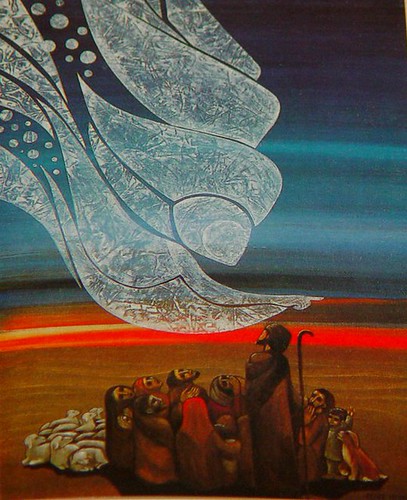
Apparently, there was no big celebration for Jesus’ birth.  No one was there to celebrate Jesus’ birth until God rounds up a group of raggedy shepherds from outside the town. 
From the world’s perspective, Jesus’ birth was nothing special – just another poor baby born to another poor family.  From the world’s perspective, a Savior for the world was born in the most unexpected country - Israel, in the most unexpected city – Bethlehem , in the most unexpected house – a house for animals, to the most unexpected people – a poor couple not even fully married, who were just passing through Bethlehem, not even permanent residents. 

Luke has set up a great contrast in this story.  Luke is quietly telling the story of two kings.  The first king grew up in a small agricultural village outside the power centers of his time.  However, he eventually became the most famous king in the world.  He brought peace after a long time of darkness and despair.  He fulfilled the longings of his people - as few people even believed possible. 
His kingship was all about unity and reform - reform of every part of society.  He was depicted in every form of art - music, painting, sculpture, literature.  Poets wrote songs about him.  Historians wrote the story of his life.  The day of his birth was celebrated for years to come.  In fact, his life was so momentous, so significant, that it started a new era.  People reset their calendars, making year one the year of his birth.  Messengers traveled around the world announcing the Good News of his Kingdom.
He was given names and titles never before given to another human being:
Prince of Peace - He was the king to end all wars.  People could hang up their swords because of his peace.
Light of the World - Like the sun, the golden rays of his peace and wisdom warmed the whole world.
King of Kings - All kings in all lands must bow to him.
Lord - He was the Master, the Ruler, of everything known to humanity.
Savior - He rescued humanity from self-destruction, giving them mercy, justice, and freedom.
Son of God - His father was no mere mortal.  He was human and yet also divine.  He had Godly blood in his veins.
    In the Eastern Mediterranean, people worshiped this king as god even before he died.  But after he died, people around the world worshiped him as god.
    Ironically, his great reign of peace was also associated with the single greatest torture device ever known to humanity - the cross.  In a great irony, the cross was his means for giving peace.
    Who is this great king?  You all know him.  He is mentioned in Luke’s story.  He is Caesar Augustus, the Roman Emperor.  Caesar Augustus came to power after years of civil war as a member of the Triumvirate - with Marc Antony and Marcus Lepidus.  However, that union was ripped apart by greed and the struggle for power.  Finally, after several bloody battles and betrayals, Augustus was the undisputed king and Emperor of Rome.  He maintained this peace through a combination of bribes with the right hand and the threat of the cross with the left hand.  Anyone who cooperated could share in Rome’s glory and luxury.  All who rebelled could suffer Rome’s wrath and crosses.
When Luke begins his birth narrative with Caesar Augustus, he is not simply giving a marker for time.  He is setting the back drop for a comparison of the greatest king of this world (Caesar) with the greatest King of all worlds (Jesus).
Luke tells us, Jesus is also a king - in the line of David.  Jesus is also the Son of God - actually the Son of God, not an adopted heir of a human king.  Jesus is also the Savior - a real Savior, not a brutal conqueror.  Jesus is also Lord - Master of all, not only those he defeat with the sword, the bribe, or the cross.  Jesus is also the Prince of Peace - thorough peace and goodness, not just a glossy surface.  Jesus is also the center of Good News - and this is Good News for all people, not just those on the top, Good News for the poor and the rejected, delivered first to the shaggy shepherds.
Caesar Augustus became king with armies and violence.  Jesus became king as a helpless, homeless baby in the hay.  Caesar Augustus won friends and influenced people through the shrewd use of money and resources.  Jesus called his friends to shrewdly give away their money and resources to benefit others.  Caesar Augustus appealed to people’s desire for pleasure, sex, and luxury.  Jesus appealed to people’s inner desire to give up themselves for the good cause of the Kingdom of God.  Caesar Augustus proved his undeniable authority by nailing rebels to crosses to punish them for their sins.  Jesus proved his undeniable love and authority by being nailed to a cross to forgive rebels of their sins.   Caesar Augustus has long faded from the scene.  Jesus’ fame and glory are still growing every day. 

Yet the battle is not over.  Like we celebrated last week, we still walk in the Twilight Hours.  Every day, we make choices.  Will we live for Caesar, or will we live for Jesus?  Will we live like Caesar, or will we live like Jesus?  Will we live for power, sex, and money, or will we live for love, grace, and truth?  Will we pursue prestige, honor, and glory, or will we pursue humility, service, and mercy? 
These battles never end.  The Christmas story of two kings never ends.  Jesus is always, always, always, waiting to be born anew in us and through us.  Birthing Jesus as King in our lives is never easy.  It wasn’t easy for Mary, and it’s not easy for us.  Every day, we make the choice: Caesar or Jesus - the love of power or the power of love.  Which King do you want in your life?  What choice are you making?

Wednesday, December 22, 2010

Christmas 2010 - Darkness to Light

KNU International English Church
December 26, 2010

This sermon is part of a unique Christmas service, moving from darkness to light.  The service will begin in darkness.  While some Old Testament prophecies about the Messiah scroll across the screen, a single candle will enter as a sign of the Christ-light entering the world as a small, fragile child.  Slowly, throughout the service, the room will get lighter and lighter.  All the while, a series of artists will be adding a few strokes at a time to a single picture of Advent Candles and the Christ-Light.  We will finish with each person holding a lit candle and singing "Joy to the World."  The sermon is in three parts, with three different preachers.

Part 1: The Beginning  (Josh Broward)

    This is not the beginning.  Christmas is not the beginning.  We usually think of Christmas as the beginning of the Jesus Story.  This is when Jesus was born.  But this is not when Jesus began.
    Jesus is the very Logic of the universe.  Jesus is the Fiber of our global cloth and the Stitching at the seems of the universe.  Jesus is the Glue between the atoms.  Jesus is the foundation on which the mountains were set.  Jesus is the metaphysical Space in which the stars were hung.  Jesus is the Supreme Contractor of creation and at the same time the one and only Construction Supply Company.  Jesus is the Math before math, the Science before science, the Art before art, the Word before words.

John 1:1-15
1 In the beginning the Word already existed.  The Word was with God, and the Word was God.
 2 He existed in the beginning with God.
 3 God created everything through him, and nothing was created except through him.
 4 The Word gave life to everything that was created, and his life brought light to everyone.
 5 The light shines in the darkness, and the darkness can never extinguish it.
 6 God sent a man, John the Baptist, 7 to tell about the light so that everyone might believe because of his testimony. 8 John himself was not the light; he was simply a witness to tell about the light. 9 The one who is the true light, who gives light to everyone, was coming into the world.
 10 He came into the very world he created, but the world didn’t recognize him. 11 He came to his own people, and even they rejected him. 12 But to all who believed him and accepted him, he gave the right to become children of God. 13 They are reborn—not with a physical birth resulting from human passion or plan, but a birth that comes from God.
 14 So the Word became human and made his home among us. He was full of unfailing love and faithfulness.  And we have seen his glory, the glory of the Father’s one and only Son.
 15 John testified about him when he shouted to the crowds, “This is the one I was talking about when I said, ‘Someone is coming after me who is far greater than I am, for he existed long before me.’”

    Christmas is not the beginning of Jesus’ story.  “The Word was with God, and hte Word was God.  He existed in the beginning with God” (John 1:1-2). 
    But Christmas is also not the beginning of our story.  We have to go back to Genesis and beyond to get to the place where our story begins.  “Even before he made the world, God loved us and chose us in Christ to be holy and without fault in his eyes.  God decided in advance to adopt us into his own family by bringing us to himself through Jesus Christ.  This is what he wanted to do, and it gave him great pleasure” (Ephesians 1:4-5). 
    Our story begins in the very heart of the Eternity, in the love of the Trinity.  Before the creation of the universe, God loved us.  Before one star was planted in the sky, God had a plan to choose us as his own.  Before one electron was matched with one neutron to make the first atom in all creation, God had a plan to wrap us up into his family through Jesus the Messiah.
    Then, creation happened.  Then, the Fall.  Then, the covenant with Abraham.  Then, the Exodus and the formation of Israel.  Then, countless failures and redemptions and promises of the Messiah.  Then, finally, finally, after centuries of waiting and longing and pain, the Messiah came.  The true Light shined in our darkness.
    The Logic of the universe, the Architect of galaxies, the Crafter of sunsets ... became a human child.  The blazing Glory of the infinite God entered our world as a baby boy.  The True Light who gives light to everyone came into our darkness as a tiny candle flickering in the wind.
    But this Light shines in the darkness, and the darkness can never extinguish it.  It is vulnerable, but it shines on.  It waves and sputters, but it shines on.  Many reject it, but it shines on.  It shines and it spreads, from person to person, from heart to heart.  The true Light, which gives light to the world is on the move, changing our world, from darkness to light.

Part 2: Savior Born in a Stable  (Jocel Sancho Longcop)

    God controls all history. Augustus’ decree went out in God’s perfect timing and according to God’s perfect plan to bring His Son into the world.  Christmas is History.

Luke 2:1-7
1 At that time the Roman emperor, Augustus, decreed that a census should be taken throughout the Roman Empire. 2 This was the first census taken when Quirinius was governor of Syria. 3 All returned to their own towns to register for this census. 4 And because Joseph was a descendant of King David, he had to go to Bethlehem in Judea, David’s ancient home. He traveled there from the village of Nazareth in Galilee. 5 He took with him Mary, his fiancĂ©e, who was obviously pregnant by this time. 6 And while they were there, the time came for her baby to be born. 7 She gave birth to her first child, a son. She wrapped him snugly in strips of cloth and laid him in a manger, because there was no room for them in the village inn.

The Savior has come.
He has come at a time when all the doors were closed. He has come at a time when there was nowhere to lay him down but the manger.  A feeding trough for a bed?  Despite popular Christmas card pictures, the surroundings where Jesus was born were dark and dirty.
    A Savior born at the stable - this was not the atmosphere that the Jews expected as the birthplace of the Messiah-King. But for reasons that are beyond our comprehension ...
This Savior, who was born at the stable, though He was God, chose to come into a humble family and be a carpenter’s son. (Luke 4:22)
This Savior, who was born at the stable, though He was God, did not demand and cling to His rights as God. (Philippians 2:6)
This Savior, who was born at the stable, though He was God, made himself nothing and appeared in humble human form (Philippians 2:7).

Christmas is History. Christ, the Son of God, entered our world. He has come.
The baby Jesus in the manger has been the subject of a beautiful Christmas scene, but we cannot leave Him there.

Christ has come to save the lost, but he is coming back as a reigning King of
the redeemed.
He was born in dark and dirty world, but darkness and filthiness cannot contain
       Him for He is pure light. He is at work in our sin-darkened world.
Royal baby bed, He did not desire, though He is the King of kings and the Lord
 of lords.
In Him, the salvation of God has appeared to all men, but not all have received
Him.
Scorned by those He came to save, He gave more grace, and more grace, and
    more….
Tattered, broken, and spilled out, He endured shame at the cross to bring hope
       and healing.
Meekly, He fulfilled the purpose of His birth, obedient to the very end.

And God, the Father, gave Him a name. Jesus Christ - a name that is above
 every name; a name by which every one is saved.

Savior, though He was born at the stable, the stable was God’s perfect place to
  set forth the life changing and light giving power of the One and Only.
   
    The baby Jesus in the manger is a beautiful Christmas scene, but we cannot leave Him there. History continues to unfold……..changing our world…..

Part 3: The Art of Light and Life  (Michael Palmer)

    Israel's world was burning right in front of their eyes.  The Israelites were a proud people.  They had a long history of prophets, kings and victories, but the moments the were living through were not filled with the powerful stories and figures that their history had been filled with. Until John the Baptist, it had been 400 years since a prophet spoken a divine word. Israel was in the middle of “The Dark Period.” During this period all seemed lost.
    When our story picks up in Matthew, Israel is under the rule of the Roman Empire.  Israel has been conquered and reconquered by many foreign Kings. They are now under the reign of a Caesar (Augustus) who is ruthless, and a governor (Herod) who is jealous and insecure. Israel's world was dark. Israel's world was hopeless.
    During this time, Rome was in the middle of what's called Pax Romana. Though it means, “Roman Peace” it was obtained in the most violent way possible.  The world that Rome conquered was not just defeated, but Rome would break the will of those they conquer. They destroyed their opponent so fully, so completely, that there was only enough left to mutter the words, “Caesar is lord.”
    Bringing the suffering to a sad climax, the birth of Jesus took place right before the mass murder of countless infants by Herod, a power hungry, insecure governor.
    Into this dark and broken world, a light was born...


Hopelessness
    In Israel's mind, the worst part of all of this had to be the not knowing.  Israel had not seen any hint of change in 400 years.  They worshiped a silent God who seemed to have completely abandoned them.  Israel was once a world power, but they had become a commodity that was passed from King to King when a new country conquered the old one.  By earthly standards Israel had no reason to hope.
    How often do we feel this sort of hopelessness in our lives?  We know something is wrong, but nothing seems to come from our prayers. Our search for answers give us only more questions.  God seems to be distant, and he seems to not care.  Maybe you have not heard from him in a long time, or maybe you don't like the things he says to you. For so many of us, God's voice has become a distant memory, and like a friend you once knew years and years ago, you aren't sure you'd even know God's voice if you heard it today.
    The reason hopelessness is so dark is because it works its way into the deepest parts of us and makes us believe that nothing will change.  It convinces us that our problem is too big for God or that He doesn't care.  Hopelessness pulls you away from God and from others and instead drives you deeper into yourself. It separates you from the community that God has given to us. Hopelessness is a suffocating darkness.

The Light of the World
    In John 9, Jesus said that, “...I am the light of the world." Through this statement, Jesus is saying that all of the hopelessness that you and I will find in this world, all the unjust darkness that you can't control, and the conflict that you can't seem to avoid finds it's end, it's ultimate destruction, in Him. He is saying that darkness isn't just a dual force, equal in strength and power to Christ, but instead, darkness is only the absence of light. Darkness is completely broken and defeated by light. Christ is telling us that our hopelessness can and will find its end in Him.
    Maybe it is a work situation that makes you feel sick every time you think about it. Maybe it is a home situation that has your heart broken. Maybe money or sex has a grip on you that you can't seem to break away from.  Maybe an addiction has rooted itself so deeply inside of you that you can't imagine a world in which you live free from that hold.  Maybe you feel like possessions, friends, or social status or standing will give you the purpose and meaning you have been searching for. And maybe, just maybe, you are realizing that none of those will light that dark place in your soul.


Candles
    As we planned this service, we wanted it to be a full representation of what Christ's birth means to us as people.  Words can be important, but when you actually think about it, it so often is music, or art, or action that truly changes us.  Words can be hollow. When we don't like what we hear, we can tune out words. But actions and examples can revolutionize the ordinary or mundane. Actions are hard to ignore and, when they are done through the power of Christ, they are impossible to witness and not cause change.
    The candle you watched be brought in at the beginning of the service represents the delicate light that was birthed into the world on that miraculous Christmas day 2000 years ago.  This candle represents “the Light” that powerful men traveled across great distances to see, and that other powerful men killed to extinguish.  This represents “the Light” that had a star announce its arrival, and angels to tell of its coming.
    The miracle of Christmas is that the light embodied in the baby Jesus, our Savior, was only a small, delicate light when it first made its appearance some 2000 years ago. It was not, at that moment, the light that cast out demons and the light that defeated death.  It was the naked, vulnerable light that could not fight for itself.  It could not find a decent place to sleep and could not feed itself.  The light of the world was as fragile life itself.

Painting
    As for the painting. The majority of Israelites had no idea that they were living through the change that they, their parents, and their parents before them, had spent their lives praying for.  They were witness to the overthrowing of the kingdom of earth, and they had no idea.
     You see, the beauty of the way our God works is that we can't see his working when we are in the middle of it. Our role in the shaping of the earth is represented by the artists who are painting this picture. As people who follow Christ, we only participate in a small part of a MUCH bigger picture. A picture that has taken thousands of years to create. In our life we might make a stroke or two, but nothing that brings about massive change.  But through us, God is working on this painting.  He is changing the darkness and, from the threads of the canvas of our world, is using His perfect artistic taste to seduce out of the canvas a picture that the world has never seen and has always hoped for. 

Artists
    This brings us to the artists,  a truly amazing part of this whole story.  In Matthew 5:13-16 Jesus tells his disciples that,

 "You are the salt of the earth. But if the salt loses its saltiness, how can it be made salty again? It is no longer good for anything, except to be thrown out and trampled by men.  "You are the light of the world. A city on a hill cannot be hidden.  Neither do people light a lamp and put it under a bowl. Instead they put it on its stand, and it gives light to everyone in the house. In the same way, let your light shine before men, that they may see your good deeds and praise your Father in heaven.

    Throughout the service you have seen many people become artists and participate in the transformation of a canvas.  They each came with an unlit candle, then joining with the light of Christ, they took that light to participate in the painting of a beautiful picture.  No one person did this whole painting, and no one person holds the only light.  We are all participating in this together.
    When Christ was born, and as he lived, he passed His light on to new artists. 
    If you notice, the explosion of Christianity happened after Christ had ascended into heaven.  The birth of Christ signaled something that was to come; the final conquering of darkness and death.   The birth of Christ means the death of hopelessness. 
    The crazy part of this whole story is that we, the Church, are invited to participate in the spreading of hope and light.  It doesn't matter how qualified we feel we are, or how much we can bring to the painting. What matters is that we walk in the light of Christ and the community of other artists.
    When we follow Christ and do our best with the 2 or 3 paint strokes we are given, we can change the canvas of our world.  As the Church, this is what we are about.  The Kingdom of God is not about material possessions, and it is not about power or prestige. Those things destroy us, and through us they destroy others. What we were created for, and invited to participate in, is the creation of something infinitely beautiful. 
    In closing, I want to challenge you, this Christmas, to think about what Christ gave to us. Christ's birth 2000 years ago gave us 2 options. We can choose to become artists and work to create beauty, or we can become arsonists, and work towards the destruction of beauty. I challenge you- each one of you- to become artists.
    Mother Theresa once said, "What I can do, you cannot.  What you can do, I cannot.  But together we can do something beautiful for God."   Church lets take this light, and with our one or two brush strokes, do something beautiful for God.

Friday, December 10, 2010

The MORE Myth - Luke 1:36-59

December 12, 2010
Josh Broward

Read Luke 1:39-56.

    Today, I am going to get some help from some other pastors.  I’m going to call in a pinch-hitter, if you will.  Listen to what Ron Lewis and Andrew Edwards have to say about Christmas and God’s upside down Kingdom.  (The video frames may be a little off, but the videos seem to be playing OK.)


    So Mary’s Song is the great, global myth buster - our global, universal myth of more.  All around the world, throughout every age and every culture and every generation, people are all hungry for the same thing: more. 
    We all want more.  Everything in us cries out for more - more power, more status, more money, more pleasure, more stuff.  We always want more, more, more, more.  We are completely and utterly addicted to more.  Our hearts are looking for satisfaction, security, and self-worth in more. 

    Our hearts crave more because we believe that more can satisfy us.  How much do we really need?  Just a little bit more, right?  Whatever we have, we need just a little bit more.  We need one more room, one more thing, one more car, one more project, one more Facebook friend, one more movie, one more of whatever it is that we are chasing in this minute. 
    The problem is that self-satisfaction is a myth.  The idea that we can actually satisfy our own desires is pure fiction.  More will always leave us empty.  Chasing more is like putting one little coffee cup of gasoline in our cars and thinking that will be enough.  More is never enough.  We always go on wanting more. 

    We also look to more for our security.  This one is especially about money and stuff.  We believe that we will have a safe and reliable future if we can save enough money or if we can get a good job that will give us earning power.  However, this also touches on status.  If I earn enough favors or social points or achievements, then my position will be secure. 
    The problem is that self-security is a myth.  Our world is too big, and we are too small.  Natural disasters, wars, illness, and economic meltdowns can strip us of our security in the blink of an eye.  More can never protect us enough.

    The last one is probably the most difficult - because it is the most subtle.  We look to more to establish our self-worth.  Why do we really want all those clothes?  Why do we really want all that success?  Why do we really want our kids to do so well?  Why do we really want that big promotion?  Why do we really want that super-cool vacation?  We are trying to justify ourselves to ourselves and others.  We are trying to prove to the world that we are worth something: “I AM valuable, dang it!  See my car.  See my clothes.  See my facebook pics in this amazing place.  See my name on the door.  See my diploma on the wall.  See my kid at Seoul National.  See my big Bible.  See my very uncool clothes that show how subversively cool I am.  I AM worth something, and this more proves it.”
    The problem is that self-worth is a myth.  At some point, all of our more will come tumbling down.  At some point, all of our more will be scattered, and we will be knocked off our self-made thrones.  One day, we will walk in the door with our hands full of all the reasons we are valuable people, and we will walk out with our hands empty and shaking.  Getting more - no matter what the more is - can never make us good, valuable people.

    Our cultures are pumping this More Myth.  Every advertisement, every business, every school, even many churches are pumping more.  If you have more, if you give more, if you serve more, if you save more, if you do more, if you play more, if you pray more, if you just get more, then you will find satisfaction, security, and self-worth. 
    Mary busts this up.  Pregnant with the Son of God and full of the Holy Spirit, she cries out: “More will never be enough!  God will bust up all our mores!  All our thrones and trophies and degrees and photos will be scattered to the wind and burned in the fire.  What will survive?  Praise.  Joy.  Real blessing.  Mercy.  Humility.  Hunger.  God.”
    This is sheer grace.  This is the action of God and only the action of God.  Mary didn’t do anything to deserve to house the Creator of the Universe in her womb.    In absolute mercy, God strips the rich of our wealth, the powerful of our power, the satisfied of our satisfaction.  In ruthless grace, God destroys our myths. 
    Why?  Because they are myths.  They are falsehoods.  They lead us astray.  They keep us from God.  So eventually, all of us, rich or poor, must face the hollow emptiness of the More Myth.  More can never satisfy us.  More can never give us security.  More can never prove our self-worth.
    If more can’t, what can?  If our global, universal, trans-cultural myth is wrong, if we are all completely screwed up inside and pointed in the wrong direction for generation after generation, then what?  Is humanity a hopeless mess?
    Again, Mary speaks right to our pain.  “How my spirit rejoices in God my Savior!  For he took notice of his lowly servant girl, and from now on all generations will call me blessed.  The Mighty One ... has done great things for me.  He shows mercy from generation to generation ... He has exalted the humble ... and filled the hungry with good things ... and remembered to be merciful.”
    Who does God help?  The humble, the lowly, the hungry, those who need mercy.

    We live in a mixed up, jumbled up world.  What is wrong seems right, and what is right seems wrong.  What is up looks down, and what is down looks up. 
    We can’t fix ourselves with more.  We can’t get right side up with more.  The More Myth is completely upside down. 
    The only way up is down.  The only way out is in.  Healing starts with feeling the pain.  Satisfaction begins with feeling the real hunger.  Security comes through radical vulnerability.  Self-worth is found in being a lowly servant girl. 
    The cure for our mixed up world is the simple Life that made Elizabeth and Mary sing.  The cure for our messed up hearts is Jesus.  Jesus, with the DNA of God and Mary, budding to life in Mary’s womb exploded GRACE into our world.  We don’t earn it.  We can’t buy it.  We can’t save it up for a rainy day.  GRACE is just there.  GRACE strips us of our myths and leaves us naked and bare before the God who loves us completely and thoroughly exactly as we are - with all of our scars and moles, with all of our wrinkles and fat rolls.  GRACE puts us empty before God Almighty so that he can fill us with Jesus.
    Here is the heart of the Gospel.  We have nothing.  We can do nothing to make God like us or love us or forgive us.  Nothing.  But God has already done it for us.  Through Jesus, God entered this world through the portal of a teenage womb.  Through Jesus, God lived and loved and died as a human.  Through Jesus, God has reclaimed humanity, saved us from our own destruction. 
    Through Jesus, God offeres us pure and absolute GRACE.  Through Jesus, God offers us true satisfaction, true security, and true self-worth.  We can’t earn it, or buy it, or achieve it.  We are naked and broken, but GRACE remains freely available to us in all of our nakedness and brokenness.    God wraps us up in his GRACE.  God clothes us in GRACE.  God heals us with GRACE.  God - absolutely and without reservation -loves us with his GRACE.
    This may not seem like enough to you.  Your pain might be too big and too deep to believe in GRACE right now.  Just remember this.  GRACE grew as a tiny life inside the womb of a tiny girl in a tiny country on a tiny planet inside a great big universe.  And this tiny seed of GRACE was the very life of God that turned our world upside down.

    This Advent and Christmas Season, I challenge you to live with upside down grace.  Do some things that just don’t seem right.  Do things that are actually so right that they seem wrong in our messed up world. 
Love an enemy. 
Do less not more. 
Compliment instead of complain.
Run to your pain not away from it. 
Hold onto hope when everyone else is getting cynical.

    The last upside down thing I want you do is this: Receive instead of give.  Now, there will be plenty of opportunities to give - our Christmas Concert tonight, and our offering for Bangladesh on the day after Christmas.  Giving is beautiful and important.  But for a little while, at least when you are alone in your room, stop trying to give to God.  Stop trying to say nice things to God.  Stop trying to do the right things before God.  Stop trying to get God to like you.  Just stand there before God, like Mary: lowly, humble, hungry, and needy.  And receive.  Let God love you.  Let God bless you.  Let God’s grace wrap around you.  Let God say to you, “From now on, all generations will call you blessed.” 

    Through Jesus, God is turning our upside down world right side up.  It’s not happening all at once.  God’s grace-revolution happening little by little, person by person, group by group.  It ebbs and flows.  But slowly, slowly, slowly, grace wins.  The power of love overtakes the love of power.  The power of humility shrinks the pride of power.  The strength of service reveals the weakness of oppression.  Slowly, slowly, slowly, grace wins.  Live for grace.  Live for grace - not more.  Live for grace, by grace, with grace.
   

Thursday, December 2, 2010

The God Gamblers - Luke 1:26-38

KNU International English Church
Josh Broward
December 5, 2010

    William Carey was born in 1761 to a simple family in Paulerspury, England.  His father was a weaver, and when Carey was 14, he became an apprentice of a shoemaker.
    In his 20s, he transitioned from shoemaking to being the local schoolmaster, and soon after, he became the pastor of a local Baptist church.  He lived in a simple cottage with a thatch (or grass) roof, but he taught himself Greek, Hebrew, Italian, Dutch, and French. 
    As he read about the adventures of Captain Cook (one of the first great English explorers), he felt a growing passion for world missions.  He realized that there are whole lands, whole nations out there who have never heard about Jesus and God’s amazing grace.  One day, he heard the missionary calling in the quiet of his workshop, and he answered with tears in the words of Isaiah, “Here am I; send me.” (See Isaiah 6:8.)
    However, his fellow Christians and even his fellow pastors were not all that supportive.  In one pastors meeting in 1786, Carey raised a challenging question.  He asked if Jesus’ command to “go and make disciples of all nations” still applies to us today.  (See Matthew 28:19.)  One Dr. Ryland snarked back: "Young man, sit down: when God pleases to covert the heathen, He will do it without your aid or mine."
    We don’t know if Carey sat down in that meeting, but Carey did not give up.  In 1792, he wrote a book about the history of Christian missions, the current state of the world, and a basic plan for establishing a missionary sending organization.  Later that year, when the Baptist Missionary Society was formed, Carey was so poor that he could only promise that he would give the profits from his book. 
    In the same year, Carey preached a sermon that sparked the modern missionary movement.  Throughout the sermon, he repeated one line again and again: “Expect great things from God; attempt great things for God.”
    In 1793, Carey and his family left for India.  However, they didn’t get very far.  The British government stopped their boat because they feared the missionary activities would endanger the trade interests of the British East India Company.  A few months later, they found a Dutch ship willing to carry them to India.
    Carey was a God Gambler.  He went against his family, against many leaders in the church, and against his own government.  He left a stable life and a stable job.  He redefined success as following the call of God.  He bet everything on Jesus.  And he would be the first to tell you, it was the best bet he ever made.
     For seven years, there were no tangible results - not a single convert.  His wife went crazy, and his son died of dysentery.  However, he stayed for 41 years.  He translated the New Testament into several Indian languages, and he helped to establish the first Christian college in Asia.1 
    Carey was a God Gambler.  He couldn’t see the whole picture.  He didn’t know how it would turn out.  He heard the call of God to participate in the salvation story, and he risked everything to obey.  Like Cary, God asks us to gamble everything on God’s salvation story.  You and I are called to be God Gamblers.  Go “all-in.”2  Push your chips to the center of the table.  Bet your life on Jesus.  It is a gamble, but God is worth the risk.  It will be the best bet you ever make.

    Let me introduce you to another set of God Gamblers: Bill and Myrtle Lee Jetton, my grandparents.  Some of you may remember that we celebrated their 70th wedding anniversary this summer.  When they got married, my grandpa was 18 and my grandma was 15.  She says, “Well, I was almost 16,” and my grandpa says, “Yeah, 15 and 2 months!”  They were pretty poor folk from the country.  My granddad did his courting by riding 10 miles each way on horseback.
    After they married, grandpa worked various types of farm jobs.  Eventually, they moved out to Colorado to work on a sheep ranch, and my grandma worked as a cook for the farm hands.  She also finished high school through the mail. 
    Then, World War 2 started, and my grandpa was drafted.  He fought in Okinawa, while my grandma tried to support herself and two little girls at home in America.  (By the way, my grandpa was a pretty good card player.  He sent home extra money for the family from his earnings in poker.)
    After the war, grandpa started university and he got involved in a job selling Vita-craft Cookware, high quality pots and pans.  Grandma and Grandpa would invite people over for dinner and then try to sell them pans.  They were great at it.  My mom says the secret to their success was half Grandpa’s skills as a salesman and half Grandma’s skills as a cook.  Anyway, within a few months, Grandpa was promoted to be his boss’s boss.  He became the director for sales in the whole region. 
    All this time, he was still going to university.  One day one of his sales appointments made him late for class, and his professor said, “Mr. Jetton, you’re late!  What do you have to say for yourself?”  Grandpa said, “Well, I made a hundred dollars this morning, and that’s why I’m late.”  (I checked the inflation rate, and that was about $1,000 today.)  After that, none of his professors complained if he was late to class. 
    They were making it rich.  Grandpa bought a brand new car, and they were starting to think about owning the horse ranch that Grandpa had always dreamed of.  Grandpa was starting to think about buying a private airplane.  They were a few steps away from making the big time, wealthy businessman life.
    Then, they became Christians.  Then, God asked my Grandpa to be a pastor.   That was a difficult calling for Grandpa.  It came just as his business career was starting to take off.  He knew the sacrifice involved, but he decided to stake his life on Jesus.  He bet everything on Jesus. 
    They had some hard times.  Usually, Grandpa would take a small struggling church, and he would help it grow to be a few hundred people, and then he would leave.  He felt like his calling and gifting was for the little churches.  There were times when they didn’t have money for Christmas presents, so they gathered wild nuts to sell door to door.  Grandpa kept food on the table and put the kids through university by buying and selling anything he could find at a bargain: cars, refrigerators, land, horses, anything.  But even at that, my mom remembers many meals of beans and cornbread - because they simply couldn’t afford anything else.
    But they continued on.  They kept serving, and they kept loving.  I’ve asked my grandpa for advice on ministry many times, and he almost always says the same thing.  “Just love the people.  Just love the people, and everything else will work out.” 
    Throughout his ministry, he helped hundreds of people become Christians, and he mentored several future leaders.  One of those is Andy Johnson, now a New Testament professor at Nazarene Theological Seminary, and another is Dan Boone, who is now president of Trevecca Nazarene University.  Dan Boone told me that when he thinks of the word “pastor,” Bill Jetton is the first image to come to his mind.
    Bill and Myrtle Lee Jetton are God Gamblers.  They couldn’t see the whole picture.  They didn’t know how it would turn out.  They left a successful business career and dreams of a big ranch to follow God’s call to pastor struggling little churches.    They redefined success as following the call of God.  They heard the call of God to participate in the salvation story, and they risked everything to obey.  They bet everything on Jesus.  And they would be the first to tell you, it was the best bet they ever made. 
     Like Bill and Myrtle Lee, God asks us to gamble everything on God’s salvation story.  You and I are called to be God Gamblers.  Go “all-in.”  Bet your life on Jesus.  It is a gamble, but God is worth the risk.  It will be the best bet you ever make.

    Our Gospel Lesson today tells us about one more God Gambler.  Throughout Advent, we’re reading Luke chapter 1, and today we begin Mary’s story.  Let’s read it now: Luke 1:26-38.

    Mary was a God Gambler.  She was engaged to a good Jewish man.  He wasn’t rich, but neither was she.  He had a respectable job as a builder.  The most important thing was that he was a good man, and he wanted her.  She was about to experience the fulfillment of every Jewish girl’s dreams: a beautiful marriage, a good home, and a family. 
    Then, God shows up and asks her to risk it all.  God asks her to risk her marriage, to risk her reputation, to risk her family’s social standing, and to risk her very life.  To understand the depth of the gamble that God was asking Mary to take, watch this clip from The Nativity Story.3  So, remember the story.  Mary was engaged to Joseph.  Gabriel told Mary she would have God’s Son.  Then, Mary went to visit her cousin Elizabeth for several months.  As this clip begins, Mary is returning to Nazareth after several months away. 


    Mary was a God Gambler.  She risked everything.  She went against her family, her fiance, her culture, maybe even her self.  She couldn’t see the whole picture.  She didn’t know how it would all turn out.  She redefined success as following the call of God.  She heard the call of God to participate in the salvation story, and she risked everything to obey.  She bet everything on Jesus.  And she would be the first to tell you, it was the best bet she ever made. 
     Like Mary, God asks us to gamble everything on God’s salvation story.  You and I are called to be God Gamblers.  Go “all-in.”  Bet your life on Jesus.  It is a gamble, but God is worth the risk.  It will be the best bet you ever make.

        God calls us to be God Gamblers, too.  There may be times when we have to go against our culture, against our friends, against our family, maybe even against our own desires.  We can’t see the whole picture.  We don’t know how it will all turn out.  But God is calling us to redefine success as following the call of God. 
    God is calling us to participate in the salvation story.  Will you risk everything to obey?  Will you bet everything on Jesus?  Let’s take a few minutes and think about some gambles God might be asking from us.
    God might be asking you to gamble your job.  Maybe you have a good, stable job.  Maybe if you stay with the business you are in now, you could become rich, or at least very stable for your future.  But maybe God has something else for you.  Maybe God wants you to give more of your time to serving others and less to making money.  Maybe God wants you to follow your dreams into a career that has few guarantees.  Listen for the call of God, and then bet on Jesus.  Go all in.  It’s the best bet you’ll ever make. 
    God might be asking you to gamble your test scores or your children’s test scores.  I know, I know, I know.  This is a HUGE part of Korean culture.  But maybe that is exactly the point.  Maybe it’s too HUGE.  Maybe the importance of test scores IS the problem.  Maybe God is calling you to focus on your child’s total health rather than her test scores.  Maybe God cares more about whether she is emotionally, spiritually, and socially healthy than her grades. 
    The hard part here is that you can’t see the whole picture.  You don’t know how it will all turn out.  It would be easy not to stress about test scores if you knew that your child would grow into a healthy, happy, God-loving adult, anyway.  It would be easy not to stress about your test scores, if you knew you’d find a job that was meaningful and satisfying and provided for your family.  But studying like crazy doesn’t give you any guarantees either.  Either way, it’s a gamble. 
    Mary didn’t know how it would all turn out.  Like Mary, God asks us to gamble everything on God’s salvation story. Be a God Gambler.  Go “all-in.”  Bet your life on Jesus.  Yes, even bet your children’s lives on Jesus.  It is a gamble, but God is worth the risk.  It will be the best bet you ever make.
    God might be asking you to gamble your relationships.  Maybe you’ve been hanging out with the same people, the people like you.  Maybe God’s call for you is to make new friendships with people who are different from you, people who might need a little more grace and patience.  Maybe you’ve got this conflict that you just haven’t dealt with.  Maybe - at this moment - the call of Jesus in your life is to get all the junk out in the open and deal with everything so that you can all find healing.  Maybe the call of Jesus in your life is to find a good counselor. 
    I know.  You don’t know how it will all work out.  It would be so much easier to do the right thing if we knew it would go well for us.  Life is a gamble, but God is worth the risk.  Bet everything on Jesus.  It will be the best bet you ever make. 
    Maybe God is asking you to gamble your church.  Maybe our church is not exactly what you want.  Maybe you just don’t know about this or that.  Maybe NO church - at least no church you’ve ever seen is exactly what you want.  Instead of sitting there on the sidelines or dropping out, go all in.  Bet all your chips.  Give all you’ve got to make this church the kind of church God is calling us to be.  Bet on Jesus - here.  Of course it’s a gamble.  But you just might find that it’s one of the best bets you’ll ever make. 

    Maybe God is asking you to make the biggest gamble of all - your life.  Maybe this is the time when you need to decide that you are going to follow Jesus no matter what.  Maybe you’ve just been hanging around church.  Maybe you aren’t so sure about this Jesus guy and this whole Christianity thing.  Or, maybe you’ve been in church for most of your life, and it’s growing stale.  Maybe you’re not sure you actually want to do this for the rest of your life.
    Here’s the deal.  You can’t see the whole picture.  You don’t know how all of this is going to turn out.  It would be easy to trust in Jesus if you knew that everything would be peaches and roses.  Maybe all you can see right now is just the hint of light on the horizon.  Maybe you still don’t really get how this whole Jesus thing works.  But maybe there is something in that purple and blue that has captivated you.  Maybe there is something in that hint of the light of Jesus that you KNOW is true, something that demands that you follow.
    I can only offer you two guarantees.  First, it will be hard.  Following Jesus is necessarily difficult.  Jesus calls us to be countercultural, to go against the flow.  That is always hard.  But here’s the second guarantee.  It will be worth it. 
    Like William Cary, and Bill and Myrtle Lee Jetton, and Mary the mother of Jesus, God asks us to gamble everything on God’s salvation story.  Be a God Gambler.  Go “all-in.”  Bet your life on Jesus.  It is a gamble, but God is worth the risk.  It will be the best bet you ever make.

Thursday, November 25, 2010

God's Beautiful, Broken Drama - Luke 1:5-26

Josh Broward
November 28, 2010
KNU International English Church


Do you ever feel confused about life and God?
Do you ever wish God would show himself more clearly?
Do you ever wonder if God cares about you and your life?
Do you ever feel like you’re just going through the motions?  Wake up.  Go to work.  Go home.  Sleep.  Wake up.  Go to work.  And on and on and on.
Do you wonder if your life has any larger meaning?  Is there something in life that is bigger than us?   Is there a larger plot that gives meaning to our little dramas and comedies?
Do you ever feel like nothing is ever going to change?
Do you struggle to obey God or to maintain active faith in God? 
Do you ever feel like God and the Bible are so far from our natural world that it’s difficult to see the connection, or at least difficult to live in a connected way?
Do you ever feel disappointed with the way your life has turned out?
Do you ever feel like you’re too human, too sinful, too broken for God to really use you in a significant way?  Do you ever feel like real Christianity is for those other people who are holier or smarter or have easier jobs?
Do you ever feel that church is boring or irrelevant or maybe even corrupt?
Do you ever feel that it’s hard to connect with what’s going on here when we gather on Sundays?  Maybe there are just too many happy people for you.  Maybe you don’t believe everyone is actually this happy, and that puts you off.  Maybe the style of music or sermon or whatever is not what you want. 
Do you ever wonder if you’ll ever find a church that feels right for you? 
Do you ever wonder if you even want to be part of a church at all?

    If you ever feel like any of this, then today’s story is for you.  During the Advent Season, we’ll be reading through Luke chapter 1.  We’ll start in verse 5.  Let’s read Luke  1:5-26.

    All of Luke chapter 1 is about God’s action as the director of the Salvation Story.  God is busily working to prepare the stage for his personal arrival as Jesus.  Luke is extremely concerned to show that God is not starting a new story with Jesus.  Rather, the Jesus story is the continuation of the same salvation story that Israel has been telling for a thousand years.  The first two chapters of Luke are like an “echo chamber” of the Jewish faith.1  If you listen closely to our Old Testament readings during Advent and Christmas, you’ll hear their words and themes repeated again and again in Luke. 
    But Luke also wants the people to know that the Jesus story connects with the end of God’s story as well.  The prophet Daniel got some strange visions about the end time, and Gabriel showed up to tell Daniel about the Messiah and some of the things that would happen at the end (Daniel 8-9).   And Gabriel virtually quotes some of the prophecies from Malachi, the last Old Testament prophet.  Malachi said before the end, God would send a prophet like Elijah to prepare the people for the Lord and to turn the hearts of fathers to their children (Malachi 3-4).  Luke is saying that the Jesus story connects with Israel’s past and future.  The Jesus story is the hinge of history, moving the old salvation story forward to the beautiful conclusion that God has always planned.

    But within this story, the characters and cast are not always cooperative.  We humans do not always listen to our Director (God).  In fact, the great drama of this story is how God tries to work with a rebellious cast to bring healing to the world. 
    The beautiful truth of the gospel is that God works in our broken lives to continue his drama of salvation in us, through us, and around us.  God never gives up on people.  No matter how broken we are ... no matter how sinful we humans get ... no matter how messed up our institutions are ... God is unshakably committed to humanity, and God will work with humans to save humanity no matter the cost.  God loves us too deeply to quit.  God loves us too deeply to abandon us.  God loves us too deeply to leave us out of his salvation story.
   
    Maybe it would be helpful for us to take a look at some of the characters in this one scene of God’s salvation story.  We’ve already talked about Gabriel and how he connects the story to both the past and the future.
    The other obvious characters are Zechariah and Elizabeth.  These two were ultra religious.  Luke says they were “blameless according to all the commandments and regulations,” and there were a LOT of commandments and regulations!  They did everything right.  To top it off, they were both descendants of Aaron, the first high priest.  This would be something like being a grandchild of Billy Graham or Martin Luther. 
    But they were old, and they were barren.  No kids.  No matter how much they tried, now matter how much they prayed, they couldn’t have children.  In our cultures, not having kids is kind of sad (or maybe very sad), but in ancient Israel it was considered a curse.  People thought that barrenness was a sign of God’s displeasure, a punishment for some secret sins.  Elizabeth would be shamed in the market place.  People would wonder what was wrong with Zechariah, and if he should even be allowed to continue as a priest.  They endured a lot of shame and disgrace for this. 
    But they were stubbornly faithful.  Zechariah continued serving his people and his God as a priest.  They kept praying, with or without kids, with or without the approval of their peers.  They kept being faithful, walking a blameless walk.
    Then, God interrupts their story with a major plot change - at least a change from their expectations.  Not only has God hear their prayers for a child, God now promises them a son.  And not just any son.  God promises a son who will grow into a prophet like Elijah.  Their son will prepare people for the Messiah and all of the beautiful healing the Messiah will bring. 
    Zechariah and Elizabeth’s story of pain and unfulfilled longing is now wrapped into the larger story of Israel’s pain and longing.  God’s saving action in the life of Zechariah and Elizabeth is part of God’s saving action in the larger story of God’s saving action for Israel.
    But even still, Zechariah doubts.  Even in the face of an angel, who just about made Zechariah pee his pants, Zechariah still doubts, “But how can I be sure this will happen?  I’m an old man, and my wife is also getting up there.” 
    Have you ever wished God would just send you a sign?  Maybe you thought, “Oh, if only I could see an angel or see God face to face, then all of my doubts would be taken away, and I could fully believe God’s promises.”  Have you ever felt like that?  I sure have. 
    But it doesn’t seem to work.  Israel had all kinds of awesome signs from God: the 10 plagues, the parting of the Red Sea, the thunder and lightening at Mount Sinai.  (See Exodus.)  But as soon as Moses was gone for a few weeks, they built a golden idol and started worshiping it instead of God. 
    Zechariah is standing there looking at an angel.  And I don’t mean the kind of angels we had here last week, with the little pin on feathery wings.  I mean some kind of blinding, blazing, glorious, soaked in power and light, ANGEL!  And still Zechariah says, “OK, Mr. Fancy Pants, all bright and shiny, how can I be sure about this?  We are pretty old.”
    Gabriel seems a little ticked off and gives Zechariah a case of holy laryngitis as his “sign.”  But here’s the real beauty of this story.  God doesn’t give up on Zechariah just because Zechariah had doubts.  God works in our broken lives to continue his drama of salvation in us, through us, and around us.

    The next character in this story is actually an institution.  It’s the Temple.  This “character” is the building of the Temple, the institution of the Temple, the traditions of the Temple, and all of the people who work in the Temple. 
    The Temple was the spiritual, religious, social, and political center of Israel.  Everything extremely important happened in the Temple.  The Temple was the central focus of God’s presence in the world.  In the Temple, the people of Israel brought God daily sacrifices and incense offerings every morning and evening.  Nearly every major rite and event in the life of an Israelite was celebrated with some kind of activity in the Temple.  Luke tells us that the Temple is a beautiful and holy place.
    However, Luke also tells us that the Temple is also deeply flawed and corrupt.  Later, Jesus will enter the Temple in anger because the Temple leaders have bartered their spiritual leadership for financial gain.  The whole system of sacrifice and offering had become corrupt and abusive.  The leaders were making money by cheating the worshipers.  Jesus shouts out that the Temple has strayed from its true purpose.
    Yet, even so, Jesus still cares enough about the Temple to purge it.  Jesus still comes to the Temple every day that he is in Jerusalem to pray and to teach the people.  And in our story, the Temple, with all of its flaws and problems, is still the location for the beginning of God’s fresh activity in our world.  This is the beautiful message of the Gospel again.  God doesn’t give up on the Temple.  God works in our broken lives to continue his drama of salvation in us, through us, and around us.

    The next major character in this story is the whole nation of Israel.  Gabriel connects Zechariah’s story to the whole story of Israel.  Zechariah’s son John will turn many Israelite’s hearts to the Lord, and he will live as a prophet, preparing the way for God to come with all his saving power. 
    The very name “Israel” means “one who wrestles with God.”  Throughout Israel’s history they argued and complained and wrestled with God.  Israel and God had this love/hate, on-again-off-again relationship.  Israel was a great ball of contradictions.  They were a mixture of stubborn faithfulness and stubborn faithlessness.  They were divided and fractured, arguing among themselves.  They longed for God’s Messiah to come, but they couldn’t agree on how to get ready for the Messiah or what the Messiah would actually do when he came.
    Yet, here’s the great beauty of this story.  God didn’t give up on Israel.  Despite all of their failings and stumbling and stuttering, God continued to work for Israel and through Israel.  The wonder of the Gospel is that God works in our broken lives to continue his drama of salvation in us, through us, and around us.

    So let’s connect this story back to our lives.  Let’s think about a few more characters, some of the characters here in this room today.
    The Church of Jesus Christ is a lot like Israel and a lot like the Temple.  We in the church are broken and wounded and sinful, and so the institution of the Church is necessarily broken and wounded and sinful.  Through out the history of the Christian Church, we have seen beautiful successes and unselfish sacrifice for others and horrible failures, injustices, and apathy. 
    The simple truth is that the Church is one of the largest stumbling blocks for faith in Jesus.  A guy named Dan Kimbal wrote a very successful book called, They Like Jesus but not the Church.  It’s all about how people in their 20’s and 30’s today are entranced with Jesus but repelled by the Church. 
    As an institution, the Church is really struggling in the developed world.  Young people are leaving the Church in record numbers.  One of the great problems for our age is that the old forms of the Church are not connecting well with newer generations.  We can see the problem happening, but we aren’t sure what changes we need to make or even if we want to make those changes. 
    In terms of our local church, KNU International English Church, we are right in the midst of all of this.  Some people get frustrated and leave our church because we’re too progressive.  Other people get frustrated and leave our church because we’re not progressive enough. 
    As a pastor, sometimes I get frustrated with our church.  The truth is that I’m a perfectionist, so our imperfections really drive me crazy.  But the truth is also that my dreams for our community are often pretty unrealistic.  My dreams are sooooo big, and our progress is real but soooo slow.   As a church, we are a great mixture of faith and doubt, beautiful love and ugly apathy, unselfish sacrifice and self-centeredness.  We are everything good and bad all mixed together. 
    But here is the beauty of this story.  We are exactly the kind of people that God loves to work with.  Yes, it’s true that we are broken and sinful and imperfect, but these are exactly the kind of people God uses most.  The great beauty of the Gospel is that: God works in our broken lives to continue his drama of salvation in us, through us, and around us.  So if you are frustrated with our church, keep in mind that God might be a little frustrated too.  But ... But! ... God isn’t giving up on us.  God is continuing to work in and through us, for our healing and for the healing of the world around us.  If you’re frustrated, then I encourage you to act like God and don’t give up.  Stick with us.  Work with us and within us so that we can become together the kind of people God really wants us to be.

    The final set of characters we need to talk about is us - you and me - as individuals.  Let me be really honest with you.  I already told you I am a perfectionist.  I have high expectations for myself and for others.  In fact, I have unreasonably high expectations, impossibly high expectations, especially for myself.  There is no way in the world I could meet my own expectations for myself as a pastor, as a husband, as a father, and as a friend.  I would have to have a 1,000 hour work week and another 1,000 hours to play and to relax with my family.  The great irony of being a perfectionist is that perfectionism is itself an imperfection. 
    The net result here is that I often live with a constant sense of disappointment in myself.  I feel like I can never measure up.  I can never do enough.  I can never say enough well enough.  I can never be enough to satisfy my own relentless longings for love and justice and grace and beauty and -- well perfection.  So, often, I often have to battle a deep underlying sadness and disappointment with myself. 
    Passages like this one today help me, and they can help us.  The great beauty of the Gospel is that God works in our broken lives to continue his drama of salvation in us, through us, and around us.  I don’t have to be perfect.  You don’t have to be perfect. 
    We are broken and messed up.  We sin and make mistakes.  We believe and doubt.  We love and betray.  We care, and we ignore.  We trust grace and doubt grace.  But even so grace remains.  Even with all of our brokenness and wounds and failures, God still has grace for us, and God can still use us to share that grace with others.  The great beauty of the Gospel is that God works in our broken lives to continue his drama of salvation in us, through us, and around us.
   
    This season, during Advent, we want you to develop a feeling of anticipation.  God is working in our world.  God is working in our church.  God is working in our lives.  God is still working in our broken lives to continue his drama of salvation in us, through us, and around us.  Expect it.  Anticipate it.  Pray for it.  Demand it.  Look for it.
    Today, at the greeting table, there are these little purple ribbons.  Pick one up and tie it on your key chain or cell phone or something you will use every day.  Your life may feel really dark right now, but home comes in the morning, and morning is coming.  As we progress through Advent, we’ll see the colors change like the morning sky as the sun slowly rises.  At the beginning, there is just a hint of purple amid the blackness.  But that purple slowly changes to blue and pink and finally blazing white and gold.  If all you can see now is that hint of purple hold on to that.  Take hope because of that purple.  If all you can see is the brokenness and pain, just remember the great truth of the gospel: God works in our broken lives to continue his drama of salvation in us, through us, and around us. 
    Christ has died.  Christ is risen.  And Christ is coming again.  And this happens in us, through us, and around us every day.  Keep your head up, and pray for eyes to see what God is doing.
   

Friday, November 12, 2010

Dangerous Safety - Luke 21:5-36

Josh Broward
November 14, 2010

    You have all heard the story of “The Tortoise and the Hare,” but have you heard the sequel - “The Tortoise and the Bees”?  After winning the dramatic, ever-so-slow victory over the Hare, the Tortoise decided that it was time to lay her eggs.  Yes, the Tortoise was a girl.  But don’t blame old Aesop for that mistake; it’s very hard to tell with turtles! 
    So the Tortoise made the slow journey back to her ancestral breeding ground.  She found the same sandy field where she was born and the same tree where she had been laying her eggs for many years.  It was perfect.  There was plenty of water.  There was plenty of soft green plants nearby.  It was not too sunny but not too cold.  It was perfect -except for one thing.  This year, there was a beehive in the tree. 
    The bees were not happy about the arrival of the Tortoise.  They buzzed about her head and told her to scram.  She quietly said, “You can sting me, but you can’t kill me.  This is my home, and I must produce life.”  She quietly went about her work, moving the sand and preparing her nest.  The bees began to sting her.  They stung her head, her legs, her tail.  They lost their stingers in her shell.  She continued preparing her nest.  “You can sting me, but you can’t kill me.  This is my home, and I must produce life.” 
    Slowly, slowly, slowly, the Tortoise prepared her nest.  Slowly, slowly, slowly, she laid her eggs.  Slowly, slowly, slowly, the tiny tortoise babies developed inside their eggs.  Slowly, slowly, slowly, the attacks from the bees began to wane as more and more bees lost their stingers in her shell.  No matter what the bees buzzed as they stung her, no matter how much it hurt when they stung, she always quietly replied: “You can sting me, but you can’t kill me.  This is my home, and I must produce life.”
    Finally, after many long months of waiting and patience and endurance, her eggs began to move.  The baby tortoises began to poke through their shells and emerge into the fresh clean air.  When all of the babies were out and free, the momma Tortoise prepared her babies for the annual journey to the watering place.  As they were about to leave the nest, she said, “Never mind the bees.  They can sting you, but they can’t kill you.  This is our home, and we must produce life.”

    This world is full of bees.  Bees of all kinds buzz about us and try to distract us from our calling.  Sometimes they attack and sting.  Other times they just do one flyby after another, trying to get us off course, trying to cause us to lose focus and to lose faith.  In our passage today, Jesus calls us to be like the Tortoise: quietly faithful and unafraid.
    Let’s read Luke 21:5-36.

    Passages like this are always hard for us modern or post-modern people.  These stories about the end of time are difficult for us for several reasons.
    First, we are unfamiliar with the background perspective of this kind of literature.  This comes from a rather special kind of theology called apocalypse.  Apocalyptic literature was primarily written by suffering people who were looking to God as their only hope.  Their world situation was so bad that the only way out was a total divine shake-up.  However, most of us aren’t so desperate.  Most of us feel pretty good about our situation in life.  It may not be perfect, but it’s good enough.
    Second, we have lived with far too many people saying, “I am the Messiah” or “The time has come.”  I remember our pastor talking about 88 Reasons Why the Rapture Will Be in 1988 (a famous book in which Edgar Whisenant “guaranteed” that Jesus would come again in 1988).  I remember sitting around church potlucks or family gatherings year after year, with people debating and discussing the various “signs of the times” and whether they revealed that Jesus would return within the next few years.  A few years ago, when I preached on the book of Revelation, I was a little surprised to learn that these kind of Second Coming predictions have been proclaimed in every generation for the past 2000 years. 
    When people start talking about Jesus’ second coming, many of us kind of shut down.  Our eyes glaze over.  Our minds go numb.  Maybe we’ve heard it all before.  Maybe we don’t want to be disappointed again.  Maybe we just don’t believe it works like that anymore. 
    But perhaps the biggest reason why an apocalyptic passage like this is so difficult for us is that ... we ... are ... not ... patient.  We live in the now culture.  We speak fast.  We eat fast.  We text fast.  We drive fast.  We read fast.  We pray fast.  We live fast.  We want everything to be fast.  We want everything our way right away.  We ... are ... not ... patient.
    And patience is what this text is all about.  Patience is tough.  But this isn’t really the kind of patience we normally think of.  This isn’t the patience of not getting angry because we’re waiting in line.  This isn’t the patience of calmly answering the 1000 questions of your 5 year old.  This is more like the patience of cutting down a tree with a butter knife.  This is more like the patience of digging a swimming pool with a spoon.  This is an active patience. 
    Listen again to Jesus’ pattern in this text: Bad stuff is going to happen ... but be patiently faithful. 
When you hear of wars and insurrections, don’t panic.
You will be dragged into synagogs and prisons ... but this will be your opportunity to tell them about me, so don’t worry.
Your parents, brothers, relatives, and friends will betray you.  They will even kill some of you.  Everyone will hate you.  But not a hair of your head will perish!  By standing firm, you will win your souls. 
Jerusalem will be surrounded and defeated.  The sky and the sea will be in chaos.  People will be terrified.  But then, everyone will see me coming on the clouds.  So when life falls apart, stand and look up, for your salvation is near!
When you see all of these bad things happening, you can know the Kingdom of God is near.
Be careful.  Don’t let your hearts be dulled by the parties and worries of this life.  Stay alert.  Pray that you will stay strong and be able to stand.

    In other words, Jesus seems to be saying: “Lots of bad stuff is going to happen in this life, but be patiently faithful.  The bad stuff can sting you, but it can’t kill you.  Continue with the plan.  Keep living as my representatives in this world.  Keep loving.  Keep giving.  Keep serving.  Keep believing in me and my way.”

    But how?  How can we be patient when everything seems to be falling apart?  How can we be faithful when everyone else seems to be going the other way?  In a success oriented culture, how can we endure danger and ridicule and the potential of outward failure?
    I think the real key here comes in the strange combination of two ideas.  Look again at verses 16-17, “Even those closest to you - your parents, brothers, relatives, and friends - will betray you.  They will even kill some of you.  And everyone will hate you because of my followers.” 
    OK, great!  Is anyone ready to become a Christian today?  Sign up here and get ready for your execution.  At least Jesus is honest.  He knew that trouble was coming.  He knew it would be hard.  He knew that most of his closest followers would die violent deaths because of their faithfulness to him. 
    Following Jesus is not easy.  Sometimes it’s really, really hard.  Sometimes it takes every ounce of courage and strength that we have.  Sometimes it takes more courage and strength than we have, and only some extra help from the Holy Spirit can get us through.  Don’t let anyone fool you into thinking being a Christian will solve all your problems.  It will solve some problems, but it will also make new problems.  Even your family will sometimes be against you.  That’s just how it works. 
    This is the first part of the key:  “There will be lots of problems, and they’ll even kill some of you.”

    Here’s the second part of the key: “But not a hair of your head will perish!  By standing firm, you will win your souls” (21:18-19).  There is a safety that is beyond danger. 
    During World War I, an English poet named Rupert Brooke explained this beautifully in his faith-filled poem titled “Safety”:
        Dear! of all happy in the hour, most blest
        He who has found our hid security,
        Assured in the dark tides of the world at rest,
        And heard our word, 'Who is so safe as we?'
        We have found safety with all things undying,
        The winds, and morning, tears of men and mirth,
        The deep night, and birds singing, and clouds flying,
        And sleep, and freedom, and the autumnal earth.
        We have built a house that is not for Time's throwing.
        We have gained a peace unshaken by pain for ever.
        War knows no power. Safe shall be my going,
        Secretly armed against all death's endeavour;
        Safe though all safety's lost; safe where men fall;
        And if these poor limbs die, safest of all.

    For us, as Christians, we have a hidden security.  We have house that this world cannot destroy.  We have gained a peace that surpasses both understanding and pain.  Even war cannot stop us.  For Christ has died.  Christ has risen.  And Christ is coming again.  “Death is swallowed up in victory.  O death, where is your victory?  O death, where is your sting?” (1 Corinthians 15:54-55). 
    But there are other stings.  There are other bees.  Other temptations and worries and siren calls haunt our world. 
Success is a nasty beast that buzzes about our souls calling for our loyalty and total sacrifice.  Work harder.  Work longer.  Pray less.  Sleep less.  Worship less.  Serve less.  Love less.  Work, work, work.  Success is everything.
Escapism buzzes gently and persistently, “Come away.  Come away with me.  Leave that work.  Leave those problems.  Leave those people.  Come away and be numb with me.” 
However, fear is perhaps the most frequent and most dangerous bee in our world.  We are afraid.  We live with fear as our constant companion.  We are afraid of failure.  We are afraid of rejection.  We are afraid that we will not be good enough.  We are afraid that our kids will not measure up.  We are afraid of falling behind.  We are afraid of not being cool.  We are afraid of not having enough money.  We are afraid of losing control. 

    Jesus says again and again, “Don’t panic.  Don’t worry.  Don’t be afraid.”  Christ has died.  Christ is risen.  Christ is coming again.  Jesus said, “I have told you all of this so that you may have peace in me.  Here on earth you will have many trials and sorrows.  But take heart, because I have overcome the world” (John 16:33).  Christ has died.  Christ is risen.  Christ is coming again.
    Here is the Gospel.  God has given us an unshakable security in Jesus Christ.  Because of Jesus’ life, death, and resurrection, our sins can be forgiven, and we can participate in his resurrection life.  Christ’s resurrection life in us gives us immunity to death and to all the other bees. 
Where O Death is your victory?  Where O Death is your sting? 
Where, O Success, is your victory?  You will fade away like the grass in the fields.  If I do not bow down to you, you cannot kill me.  You cannot really hurt me.
Where, O Pleasure, is your power?  Christ has made a new life well up inside us like an eternal spring.  We can participate in the healing of the world.  What can you offer to compare with that?
Where, O Fear, is your threat?  “Nothing can ever separate us from God’s love.  Neither death nor life, neither angels nor demons, neither our fears for today nor our worries about tomorrow - not even the powers of hell can separate us from God’s love.  No power in the sky above or in the earth below - indeed , nothing in all creation will ever be able to separate us from the love of God that is revealed in Christ Jesus our Lord” (Romans 8:38-30).

    The things of this world which buzz in our ears and sting our hands - they are passing troubles, fading worries.  Because of Jesus’ life, death, resurrection, and return, we can stick to the plan.  Like the Tortoise and her nest, the progress may be slow, painfully slow.  Sometimes, we might not even be able to see the progress.  But stick to the plan.  Hold on to Christ.  Be patient.  Never mind the bees.  They can sting us, but they can’t kill us.  God’s Kingdom is our home, and we must produce life.  Stick to the plan.  Hold on to Christ.  Love faithfully.  Give faithfully.  Serve faithfully.  Pray faithfully.  Celebrate faithfully.  Live faithfully.  Hold on to Christ.

    Oscar Romero was a great Latin American reformer.  As an archbishop in the Catholic church, he worked tirelessly for justice, democracy, and peace in El Salvador.  Listen to how he explains the slow march of faithfulness:
    It helps, now and then, to step back and take the long view.  The kingdom is not only beyond our efforts, it is beyond our vision.  We accomplish in our lifetime only a tiny fraction of the magnificent enterprise that is God’s work  Nothing we do is complete, which is another way of saying that the kingdom lies always beyond us.
    No statement says all that could be said.  No prayer fully expresses our faith.  No confession brings perfection.  No pastoral visit brings wholeness.  No program accomplishes the Church’s mission.  No set of goals and objectives includes everything.
    This is what we are about: we plant seeds that one day will grow.  We water seeds already planted, knowing that they hold future promise.  We lay foundations that need further development.  We provide yeast that produces effects beyond our capabilities.
    We cannot do everything, and there is a sense of liberation in realizing that.  This enables us to do something, and to do it very well.  It may be incomplete, but it is a beginning, a step along the way, an opportunity for God’s grace to enter and do the rest.  We may never see the end results, but that is the difference between the master builder and the worker.  We are workers, not master builders, ministers, not messiahs.  We are prophets of a future not our own.

    On March 23, 1980, Oscar Romero asked El Salvador’s soldiers to stop obeying the government’s orders for repression and violence against the innocent.  The next day, he was celebrating Mass at a hospital chapel.  While he was holding up the cup, representing Christ’s blood, he was shot and killed.  He fell over the altar, and his blood mixed with the wine from the cup.

    This is the difficult calling of all who follow Christ - to allow our blood to be mixed with his.  We stand with the Christ who has died - enduring any suffering necessary - knowing that they can sting us but they can’t kill us.  We stand with the Christ who is rise - enjoying his resurrection life, and knowing that we will be raised with him in the end.  We stand with the Christ who is coming again - working toward his coming, producing life, with grace and love and patience. 


    Christ has died.  Christ is risen, and Christ is coming again.  Therefore, stand firm.  Be alert.  Do not let your hearts be dulled by the parties and worries of this life.  Pray that God will make you strong so that you can stand firm until the end.